

Egypt and Morocco Tour Packages: 13 Days of Pyramids, Nile Cruises & Imperial Cities
Egypt and Morocco Tour Packages: 13 Days of Pyramids, Nile Cruises & Imperial Cities
Duration
13 Days / 12 Nights
Type
Runs
Overview
Few travel experiences on Earth can match the richness of combining two of Africa's most storied civilizations in a single, seamless journey. These Egypt and Morocco Tour Packages are designed for travelers who refuse to settle for ordinary — those who want to stand before the last surviving Wonder of the Ancient World in the morning and lose themselves in the lantern-lit souks of Marrakech by nightfall. Over 13 extraordinary days and 12 nights, this carefully crafted itinerary takes you from the pharaonic grandeur of Cairo and the timeless Nile Valley to the imperial splendor of Morocco's most legendary cities.
Your adventure opens in Cairo, where a welcome Nile dinner cruise — complete with folkloric music and the shimmer of city lights on the water — sets the tone for everything ahead. The following days immerse you in the Giza Plateau, where the Great Pyramid of Khufu, the watchful Sphinx, and the Valley Temple stand as permanent proof of human ambition. A visit to the Grand Egyptian Museum, home to Tutankhamun's complete collection and a colossal statue of Ramses II, deepens the experience before a domestic flight whisks you south to Luxor.
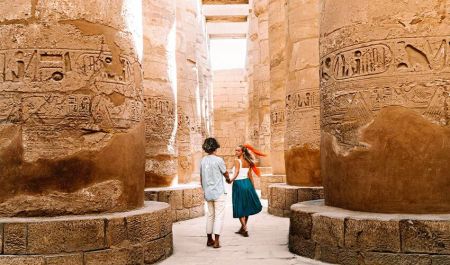
On the east bank, Karnak Temple — the largest religious complex ever constructed — and the luminous Luxor Temple leave an impression that stays with you long after you've boarded your 5-star Nile cruise. Sailing south, you'll uncover West Luxor's royal secrets: Queen Hatshepsut's cliffside mortuary temple, the painted royal chambers of the Valley of the Kings, and the monumental Colossi of Memnon. In Aswan, the twin temples of Edfu and Kom Ombo, the island sanctuary of Philae, and the engineering marvel of the High Dam round out Egypt's chapter of this dual-nation adventure.
The journey then pivots dramatically to Morocco, where these Egypt and Morocco Tour Packages reveal an equally layered world. In Casablanca, the Hassan II Mosque — its 210-meter minaret rising above the Atlantic — is a masterwork of modern Islamic architecture. A drive to Rabat, Morocco's stately capital, brings you face-to-face with the Hassan Tower, the serene Mausoleum of Mohammed V, the ocean-view Kasbah of the Udayas, and the guarded grandeur of the Royal Palace.
Day ten belongs to Meknes and Volubilis. In Meknes — one of Morocco's four imperial capitals — the ceremonial gateway of Bab Mansour, the tranquil Mausoleum of Moulay Ismail, and the vast royal granaries of Heri es-Souani speak to a sultan's ambitions. Just outside the city, the Roman ruins of Volubilis preserve extraordinary floor mosaics, a triumphant arch, and the skeletal remains of a basilica — North Africa's most significant Roman archaeological site, still standing in near-perfect condition.
Fez, Morocco's intellectual and spiritual heart, rewards curiosity at every turn. Al-Qarawiyyin University, founded in 859 AD and recognized as the world's oldest continuously operating institution of higher learning, anchors a city filled with medieval wonders. The carved cedar splendor of Bou Inania Madrasa, the vivid dye vats of the Chouara Tanneries, the decorated Nejjarine Fountain, and the vast car-free labyrinth of Fes el-Bali together create a day you'll be recounting for years.
The journey reaches its colorful finale in Marrakech — the Red City — where Bahia Palace's scented gardens and zellij-tiled chambers contrast beautifully with the spiritual presence of the Koutoubia Mosque. The medina's UNESCO-listed souks overflow with handcrafted leather, metalwork, spices, and textiles, while Jemaa el-Fna Square transforms at dusk into one of the world's great open-air spectacles.
Every element of these Egypt and Morocco Tour Packages is handled with precision: private air-conditioned transportation throughout, domestic flights between Egyptian cities, a full-board 5-star Nile cruise, 5-star hotel accommodation in Cairo and Luxor, and the guidance of expert Egyptologists and certified Morocco specialists every step of the way. All entrance fees and service charges are included, so you can focus entirely on the experience.
Whether you're a first-time traveler to North Africa or a seasoned explorer adding two iconic destinations to your list, these egypt morocco tours represent one of the most complete and rewarding dual-country itineraries available. Don't let this journey remain a daydream — inquire today and take the first step toward an adventure that connects five thousand years of human history in just 13 days.
Included
- Airport meet-and-assist at Cairo International Airport and Mohammed V International Airport
- 2 nights at a 5-star Cairo hotel (bed & breakfast)
- 1 night at a 5-star Luxor hotel (bed & breakfast)
- 4 nights aboard a 5-star Nile cruise (full board)
- Hotel accommodation in Casablanca (1 night), Rabat (1 night), Fez (2 nights), and Marrakech (1 night)
- All domestic flights: Cairo–Luxor and Aswan–Cairo
- International flight: Cairo to Casablanca
- Private air-conditioned transfers throughout
- Entrance fees to all listed sites
- Professional Egyptologist guides in Egypt and certified local guides in Morocco
- All taxes and service charges
Excluded
- International airfare to/from Cairo or home from Marrakech
- Egypt and Morocco entry visas
- Optional tours or activities
- Personal expenses and gratuities
Itinerary
Day 1 Arrive in Cairo
Your Egypt and Morocco Tour Package adventure kicks off the moment you land at Cairo International Airport. A dedicated representative greets you personally, handles all arrival formalities, and escorts you in a private air-conditioned vehicle to your elegant 5-star hotel. After settling in and freshening up, your first evening unfolds on a magical Nile dinner cruise — gliding past Cairo's glittering skyline while savoring authentic Egyptian cuisine, live folkloric music, and a mesmerizing belly dancing performance. It's the perfect introduction to a country that has been captivating travelers for thousands of years.
Meals Included :
Day 2 Giza & Saqqara
After a generous breakfast, your expert Egyptologist guide meets you for a full-day immersion into ancient Egypt's most iconic landmarks.
Giza Pyramids Complex — Step onto the plateau where history was permanently rewritten around 2600 BC. Three colossal pyramids rise from the desert floor, built during Egypt's 4th Dynasty as eternal monuments to royal power and the belief in life beyond death.
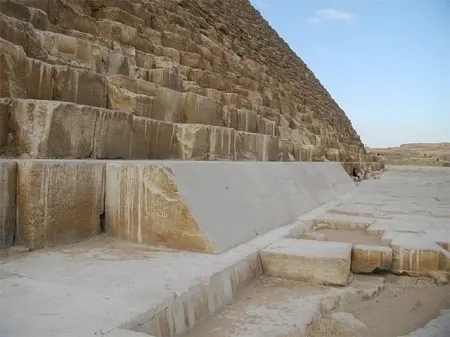
The Great Pyramid of Khufu — The only surviving Wonder of the Ancient World, commissioned by Pharaoh Khufu around 2570 BC. Originally standing at 146 meters, it held the title of the tallest man-made structure on Earth for over 3,800 years. Its precise astronomical alignment and complex internal passages continue to astonish engineers and historians alike.
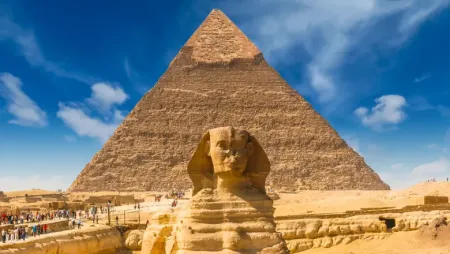
The Great Sphinx — Carved from a single limestone outcrop during the reign of Pharaoh Khafre (2558–2532 BC), this lion-bodied guardian stretches 73 meters in length and 19 meters in height. Between its paws, the Dream Stela of Thutmose IV adds another layer of mystery to one of archaeology's most enduring icons.
The Valley Temple — An Old Kingdom mortuary complex where sacred purification rituals including the "Opening of the Mouth" ceremony prepared pharaohs for their eternal journey. Its massive granite blocks and tight corridors offer a raw, unfiltered connection to ancient Egyptian funerary belief.
The Grand Egyptian Museum (GEM) — One of the world's most ambitious cultural projects, the GEM spans 490,000 square meters and is perfectly aligned with the Giza Pyramids. Inside, Tutankhamun's complete tomb collection, a towering 11-meter colossus of Ramses II, the Hanging Obelisk, and thousands of masterpieces spanning five millennia of civilization await you.
After a flavorful lunch at a local restaurant, your exploration continues south to:
Saqqara Step Pyramid — Designed by the visionary architect Imhotep for Pharaoh Djoser around 2670 BC, this six-tiered marvel is the world's first large-scale stone structure. Its innovative design transformed royal architecture forever and directly inspired the later pyramids of Giza. The surrounding ceremonial courtyards and stone-built complex mark a turning point in all of human history.
Late afternoon transfer to the airport for your short domestic flight to Luxor.
Meals Included :
Day 3 East Bank of Luxor
Morning at the divine Karnak Temple Complex, followed by lunch on your Nile cruise. Afternoon at the atmospheric Luxor Temple. Board your 5-star Nile cruise for overnight.
Meals Included :
Day 4 West Bank of Luxor
Visit the cliffside Temple of Hatshepsut at Deir el-Bahari, descend into the royal tombs of the Valley of the Kings, and admire the towering Colossi of Memnon. Return to cruise for overnight sail.
Meals Included :
Day 5 Edfu & Kom Ombo
Horse-drawn carriage to the dual-deity Temple of Kom Ombo and the superbly preserved Temple of Edfu, dedicated to Horus. Full-board cruise continues south.
Meals Included :
Day 6 The Grand Landmarks of Aswan
Aswan, Egypt's southernmost gateway, greets you this morning with a warmth and pace all its own. After breakfast, your guide leads you through three of the city's most celebrated attractions.
Aswan High Dam — Completed between 1960 and 1970, this engineering triumph transformed modern Egypt by taming the Nile's annual floods, creating the vast Lake Nasser, and generating the hydroelectric power that fueled the country's modernization. A visit here puts the ancient Nile-dependent civilization into sharp modern perspective.
The Unfinished Obelisk — Commissioned by Queen Hatshepsut (1508–1458 BC) to become the largest obelisk ever raised, this colossal monument was abandoned mid-quarry after a crack appeared in the granite. Left exactly where ancient craftsmen set down their tools thousands of years ago, it offers a rare, intimate look at the stone-cutting methods and extraordinary ambition that shaped Egyptian architecture.
Philae Temple — One of Egypt's most hauntingly beautiful sanctuaries, this Ptolemaic masterpiece dating to 380–362 BC was dedicated to Isis, goddess of magic, love, and motherhood. After the construction of the High Dam threatened to submerge it permanently, the entire complex was painstakingly relocated block by block to nearby Agilkia Island in one of history's most remarkable preservation projects. Its serene setting on the water and finely carved mythological reliefs make it an unforgettable final chapter of your Egyptian Nile journey.
Meals Included :
Day 7 Cairo's Hidden Cultural Treasures
An early morning transfer to Aswan Airport for your domestic flight back to Cairo. Upon arrival, your private guide takes you on a rich cultural tour through layers of the city that most visitors never discover.
The Egyptian Museum — Founded in 1901 and home to one of the world's most extraordinary collections of antiquities, spanning over 5,000 years of civilization. Statues, royal jewelry, mummies, papyri, sarcophagi, and artifacts from the Old, Middle, and New Kingdoms fill its halls — each one a direct connection to the people who built one of history's greatest empires.
The Hanging Church — Officially known as the Church of the Virgin Mary and built in the 5th century, this Coptic landmark rises about 9 meters above ground level atop the ruins of the Roman Fortress of Babylon. Its beautifully carved wooden ceiling and collection of icons spanning the 7th to 13th centuries make it a living symbol of Egypt's Christian heritage.
National Museum of Egyptian Civilization (NMEC) — Opened in 2020 in the historic district of Fustat — Egypt's first Islamic capital — this landmark institution chronicles Egypt's cultural, artistic, and spiritual evolution across the ages. Its royal mummy hall, housing 22 ancient pharaohs and queens, is among the most powerful museum experiences in the world.
After a leisurely lunch at a local restaurant, explore:
Al-Muizz Street — Dating to the 10th century and celebrated as Cairo's finest open-air museum of Islamic architecture, this storied thoroughfare is lined with mosques, madrasas, ornate sabils, and medieval palaces that reveal the artistic brilliance of Cairo's Fatimid and Mamluk periods. By evening, the street glows with atmosphere.
Khan El-Khalili Bazaar — Founded in 970 AD, Cairo's oldest and most iconic souq is an explosion of color, scent, and sound. Wind through its labyrinthine alleys past stalls overflowing with handcrafted jewelry, spices, perfumes, textiles, copper lanterns, and antiques. Pause at the legendary El-Fishawy café for a glass of mint tea before heading back to your hotel for a final Cairo overnight.
Meals Included :
Day 8 Cairo to Casablanca: A New World Awaits
After a leisurely breakfast and hotel checkout, your representative transfers you comfortably to Cairo International Airport for your flight west to Morocco. Upon landing at Mohammed V International Airport, a local team member greets you by name, assists with arrival formalities, and transfers you to your Casablanca hotel. The evening is yours to enjoy — take a stroll along the Atlantic Corniche, sip coffee at a sidewalk café, and let Morocco's coastal energy slowly draw you in.
Meals Included :
Day 9 Casablanca's Grandeur & Rabat's Royal Elegance
Start your morning with breakfast, then meet your private Morocco guide for a day that moves seamlessly from Atlantic modernity to royal heritage.
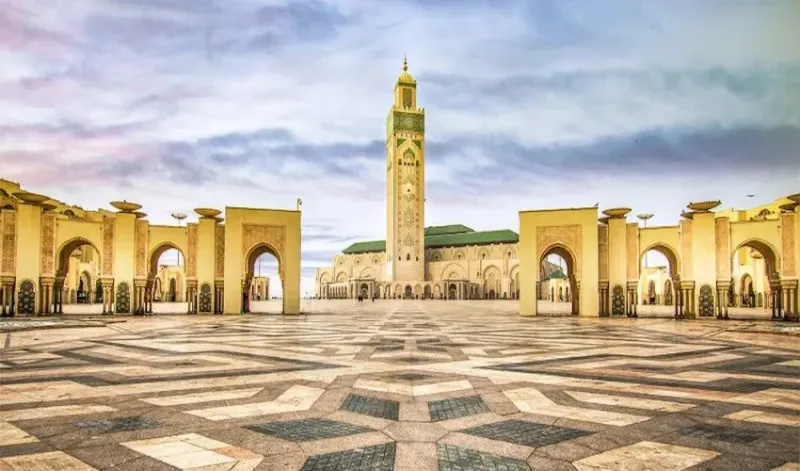
Hassan II Mosque — Completed in 1993 and dramatically positioned above the Atlantic Ocean, this is one of the largest and most breathtaking mosques in the world. Designed by French architect Michel Pinseau and crafted by master artisans from across Morocco, its 210-meter minaret — the world's tallest — soars above vast prayer halls and open courtyards. The interior, which can accommodate 25,000 worshippers, is a showcase of Moroccan craftsmanship at its absolute peak: hand-cut zellij, carved cedar, sculpted plaster, and retractable roofs over the main hall.
Casablanca City Tour — A panoramic drive reveals the city's many faces: the breezy Atlantic promenades of La Corniche and Ain Diab, the French-influenced boulevards of the modern city, the aromatic lanes of Quartier Habous, and the atmospheric Old Medina. Landmarks along the way include Mohammed V Square, Rick's Café, the Sacred Heart Cathedral, and the bustling Central Market.
Drive north along the Atlantic coast to Rabat, Morocco's graceful capital:
Hassan Tower — The unfinished 12th-century minaret of an Almohad caliph's grand mosque project, halted by his death in 1199. Its 44-meter red sandstone column, surrounded by rows of silent columns suggesting the mosque's intended scale, has stood for over 800 years as a monument to ambition and impermanence.
Mausoleum of Mohammed V — A serene white-marble sanctuary completed in 1971, housing the tombs of King Mohammed V, King Hassan II, and Prince Abdallah. Designed by Vietnamese architect Cong Vo Toan, it blends traditional Moroccan craftsmanship with clean modern lines in a space that feels both solemn and deeply beautiful.
Kasbah of the Udayas — A 12th-century coastal fortress whose whitewashed lanes, ocean views, and flower-filled alleyways create one of Morocco's most photogenic corners. The Bab Oudaia gate — a masterpiece of late Almohad stonework — announces the entrance with confident, ornate authority.
Royal Palace of Rabat — Built in 1864 and still the active royal residence, the Dar al-Makhzen's ceremonial gates and sweeping courtyards convey the dignity and continuity of Morocco's monarchy. Exterior views alone are deeply impressive.
Day 10 Imperial Meknes & the Roman Ruins of Volubilis
Breakfast at your hotel before heading south to one of Morocco's most rewarding and often underappreciated imperial cities.
Bab Mansour — Completed in 1732 and widely regarded as the finest monumental gateway in all of Morocco, this extraordinary arch is adorned with vibrant green and white zellij tilework, Quranic inscriptions, and marble columns repurposed directly from the Roman ruins of Volubilis. It was built not merely as an entrance but as a declaration — announcing Meknes to foreign envoys as a seat of imperial supremacy.
Mausoleum of Moulay Ismail — One of the rare sacred sites in Morocco where non-Muslim visitors are warmly welcomed inside. Tranquil inner courtyards, softly lit prayer rooms, and exquisite plasterwork surround the tomb of the Sultan who transformed Meknes into a 17th-century imperial showpiece. The peaceful atmosphere offers a fascinating contrast to his reputation as one of Morocco's most formidable and iron-willed rulers.
Heri es-Souani & Royal Stables — Colossal granaries and stables capable of housing up to 12,000 horses, built with ingeniously advanced ventilation and water-circulation systems that kept grain fresh and stables cool even in the fierce Moroccan summer. These structures reveal the extraordinary logistical thinking that underpinned an empire.
Place el-Hedim — The grand public square opposite Bab Mansour, where the heartbeat of Meknes can be felt in real time. Street performers, spice vendors, and café terraces fill the space, creating an atmosphere often compared — on a more intimate, local scale — to Marrakech's legendary Jemaa el-Fna.
Dar Jamai Museum — Housed in an elegant 19th-century palace, this beautifully curated collection of Moroccan woodwork, ceramics, textiles, embroidery, and jewelry provides rich cultural context for everything you've seen in Meknes.
After a satisfying lunch, drive a short distance to:
Volubilis — Morocco's most significant Roman archaeological site and a UNESCO World Heritage landmark. At its peak between the 1st and 3rd centuries AD, this thriving city built its wealth on olive oil trade with Rome. Private villa floors preserve astonishing in-situ mosaics depicting mythological scenes — Hercules completing his labors, Orpheus charming the animals, Venus at her bath — reflecting both artistic mastery and the prosperous lives of Volubilis' residents. The 3rd-century Basilica, the Triumphal Arch of Caracalla (211 AD), the Capitoline Temple dedicated to Jupiter, Juno, and Minerva, and the remains of public baths and the forum together paint a vivid picture of daily Roman life at the far edge of empire. Walking these ancient streets at golden hour is one of the most quietly spectacular experiences in all of North Africa.
Evening transfer to Fez for overnight.
Day 11 Fez: Morocco's Eternal Spiritual Capital
No journey through egypt and morocco tour packages is complete without a full day lost in Fez — the city that has been feeding the Islamic world's intellectual and spiritual life for over a thousand years.
Al-Qarawiyyin University — Founded in 859 AD by Fatima al-Fihri, a woman of extraordinary vision, this is the world's oldest continuously operating university — recognized by UNESCO and the Guinness World Records. For centuries, scholars traveled from across the Islamic world and medieval Europe to study theology, astronomy, mathematics, and jurisprudence here. Walking past its ancient walls, you feel the weight of knowledge accumulated over twelve centuries.
Bou Inania Madrasa — Built in the 14th century by the Marinid Sultan Bou Inan, this is one of Morocco's most architecturally spectacular religious schools and one of the rare madrasas that also functioned as a congregational mosque. Every surface tells a story: intricately carved cedarwood screens, geometric marble floors, muqarnas honeycomb ceilings, and tall windows opening onto the medina below. It represents Marinid craftsmanship at its absolute height.
After lunch at a traditional Fassi restaurant, continue to:
Chouara Tanneries — Operating continuously since the medieval period, these ancient leather-working vats are one of the most iconic images in all of Morocco. Viewed from the terraces of surrounding leather goods shops — a sprig of fresh mint offered to soften the pungent natural dyes — the circular stone vats filled with saffron yellow, indigo blue, and poppy red create a living canvas that has remained virtually unchanged for a thousand years.
Nejjarine Fountain — An 18th-century masterpiece of carved cedar and floral zellij mosaic, located beside a beautifully restored caravanserai that once sheltered merchants and scholars arriving from across North Africa and the Middle East. The woodworking museum above the fountain showcases the extraordinary craft traditions that built this city.
Fes el-Bali — The ancient walled medina of Fez, home to over 9,000 alleys and recognized as the largest car-free urban area in the world. Here, donkeys still carry goods through passages too narrow for vehicles, craftsmen practice trades unchanged since the medieval era, and the calls to prayer from hundreds of mosques layer into a sound unlike anything else on Earth. To walk through Fes el-Bali is to step fully and completely into another century.
Meals Included :
Day 12 Fez to Marrakech: The Road to the Red City
A comfortable private transfer takes you from Fez through Morocco's varied interior landscape — past cedar forests, the Middle Atlas foothills, and the widening plains of central Morocco — before the terracotta rooftops and palm groves of Marrakech come into view. Check into your hotel, settle into the Red City's unhurried rhythm, and spend the evening exploring the illuminated streets of the medina at your own pace — a perfect, gentle preview of tomorrow's full immersion.
Meals Included :
Day 13 Marrakech in Full & Farewell
Your final day of this remarkable egypt and morocco tour package is dedicated to one of the world's most alive and colorful cities.
Bahia Palace — Built in the late 19th century for Si Moussa, a powerful grand vizier, and later expanded by his son Ba Ahmed, this palace was designed as a deliberate statement of elegance and ambition. Wander through tranquil inner courtyards scented with orange blossom and roses, past chambers decorated with hand-carved cedar ceilings, intricate zellij mosaics, and delicate painted plasterwork — a window into the refined world of Marrakech's 19th-century aristocracy.
Koutoubia Mosque — The spiritual and architectural anchor of Marrakech, built in 1147 by Almohad caliph Abd al-Mu'min. Its 70-meter minaret, visible from almost anywhere in the city, set the standard for Islamic architecture across the western Mediterranean — directly inspiring the Giralda in Seville and the Hassan Tower in Rabat. The surrounding gardens, especially at sunset, offer one of Marrakech's most serene and memorable moments.
After a delicious lunch at a local restaurant, dive deep into:
Medina & Souks of Marrakech — A UNESCO World Heritage Site and the beating heart of the city. The medina's maze of covered souks is divided by craft: leather workers, carpet weavers, brass and copper smiths, spice merchants, lantern makers, and perfumers each occupy their own quarter, filling the air with color, texture, and scent. Skilled artisans work in view of the passageways, and every turn reveals something unexpected. Budget extra time here — you'll want it.
Jemaa el-Fna Square — As afternoon gives way to evening, this legendary open-air stage transforms completely. Food stalls materialize from nowhere, smoke from grilling lamb and fresh-squeezed orange juice fills the air, and a rotating cast of musicians, storytellers, acrobats, snake charmers, and henna artists creates an atmosphere so alive, so layered, and so completely unrepeatable that no photograph can capture it. This is where your journey ends — not with a quiet goodbye, but with a roar.
Transfer to Marrakech Menara Airport for your departure flight, carrying with you memories from two of the world's most extraordinary civilizations.
Meals Included :
Prices
Notes
15 Days / 14 Nights
Private Tour
Egypt and Morocco Tour Packages: Explore Two Timeless Destinations
Discover the beauty of North Africa with our exceptional Egypt and Morocco Tour Packages, combining Egypt's ancient wonders, a luxurious Nile Cruise, and Morocco's vibrant cities, rich heritage, and unforgettable cultural experiences.
15 Days / 14 Nights
Private Tour
9 Days / 8 Nights
Private
Egypt and Morocco Trip: 9 Days of Pyramids, Palaces & Timeless Culture
Discover the perfect blend of history, culture, and luxury with our Egypt and Morocco tour packages. Explore the timeless wonders of Giza, cruise through the treasures of Luxor and Aswan, and experience the vibrant charm of Casablanca, Rabat, and Marrakech on an unforgettable North African adventure designed for discerning travelers.
9 Days / 8 Nights
Private
12 Days/ 11 Nights
Private Tour
Morocco and Egypt Tour: Cairo, Nile Cruise & Morocco Discovery
Experience the best of North Africa with our morocco and egypt tour, combining Cairo's ancient wonders, a luxurious Nile Cruise, and Morocco's captivating cities including Casablanca, Rabat, and Meknes for an unforgettable cultural journey.
12 Days/ 11 Nights
Private Tour
8 Days / 7 Nights
Private Tour
special features
why choose Egypt Tours Way
Local Expertise, Global Standards
Tailor-Made Experiences
Real People, Real Care
Handpicked Guides & Comfortable Travel
Great Value for Money
Best Deals and Opportunities
our testimonials
Moments That Mattered – From Our Adventurers
Lindsey Hunt
Trip to Luxor and Aswan

Adam Hank
Pyramids
Peter Shaun
Siwa

Fleur Hartley
Sharm el-Sheikh

Luna & Liam Ming
Adventure
Sofia Rodrigez
Solo trip

Joseph Jordan
Highly recommend
The Greens, The Kovács, The Chens
Egypt
Mo Elakad
El Fayoum
Sarah Cameron
Saint Catherine and El Minya
Kevin Pierce
Egypt

FAQs