
Abu Simbel Temple: Explore the Monumental Legacy of Ramses II
19
Aug 2026
Abu Simbel Temple: Explore the Monumental Legacy of Ramses II
Few ancient monuments create the same sense of scale and wonder as the Abu Simbel Temple. Carved directly into the sandstone cliffs of southern Egypt, this extraordinary temple complex combines monumental architecture, royal history, religious symbolism, and remarkable engineering.
Located near Lake Nasser, Abu Simbel is one of the most memorable places to visit during an Egypt vacation. For travelers from the USA who want to go beyond Cairo and the pyramids, a journey to the Abu Simbel Temple offers the chance to experience one of ancient Egypt’s most impressive achievements in its original desert setting.
What Is the Abu Simbel Temple?
The Abu Simbel Temple is actually a complex of two rock-cut temples commissioned by Pharaoh Ramses II during the 13th century BCE. The larger temple was dedicated to Ramses II and several major Egyptian deities, while the smaller temple honored his wife, Queen Nefertari, and the goddess Hathor.
The location was carefully selected near Egypt’s southern frontier. Beyond its religious purpose, the temples communicated the authority of Ramses II and demonstrated Egypt’s strength in Nubia.
Today, the enormous statues and beautifully decorated chambers make the Abu Simbel Temple one of the essential archaeological attractions to include in a southern Egypt itinerary.
The Great Temple of Ramses II
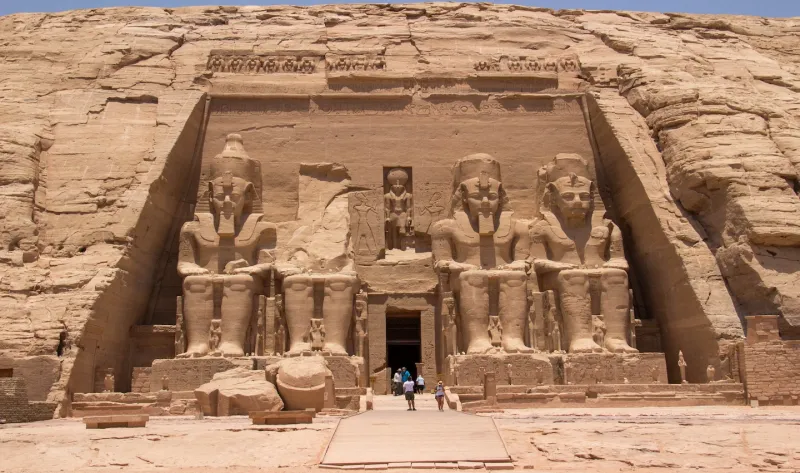
The most recognizable feature of the Abu Simbel Temple is the magnificent façade of the Great Temple. Four colossal seated figures of Ramses II dominate the entrance, creating an unforgettable first impression.
Each statue rises more than 65 feet above the ground, presenting the pharaoh in an imposing and idealized form. As you approach the entrance, the scale of the monument immediately demonstrates the ambition of Ramses II and the extraordinary abilities of ancient Egyptian craftsmen.
What Can You See Inside Abu Simbel Temple?
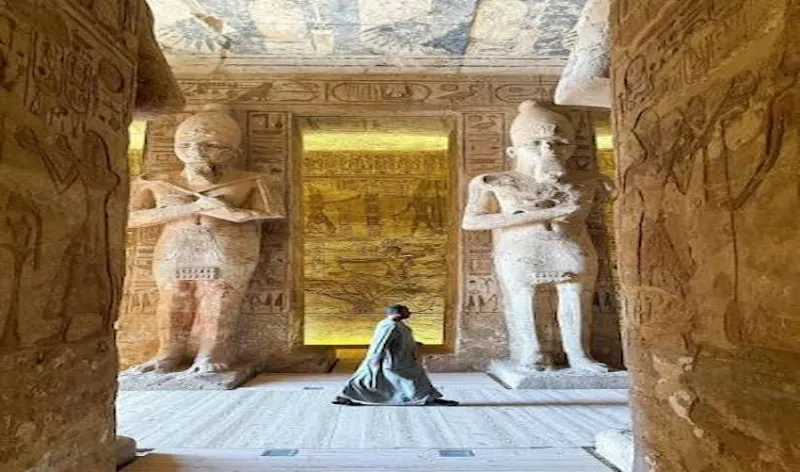
Wondering about Abu Simbel Temple inside? The interior is just as impressive as its exterior.
The Great Temple contains monumental halls, massive pillars, religious scenes, and detailed reliefs carved into the walls. Some decorations portray Ramses II as a powerful ruler and divine king, while others illustrate military campaigns, religious ceremonies, and important events from his reign.
One of the most famous scenes relates to the Battle of Kadesh, a major conflict between the Egyptians and the Hittites. The temple reliefs present Ramses II as a heroic warrior, offering visitors an insight into how ancient rulers used monumental art to preserve and promote their legacy.
The Temple of Queen Nefertari
Beside the Great Temple stands the smaller temple dedicated to Queen Nefertari and Hathor, the goddess associated with love, motherhood, music, and joy.
Its design is particularly remarkable because Nefertari was represented on a monumental scale alongside Ramses II. The temple reflects the queen’s importance and provides a fascinating perspective on royal women in ancient Egyptian society.
For visitors exploring the Abu Simbel Temple, this second sanctuary should not be overlooked. Its elegant statues and detailed reliefs complement the grandeur of the Great Temple while offering a different artistic experience.
Fascinating Abu Simbel Facts: The Solar Alignment
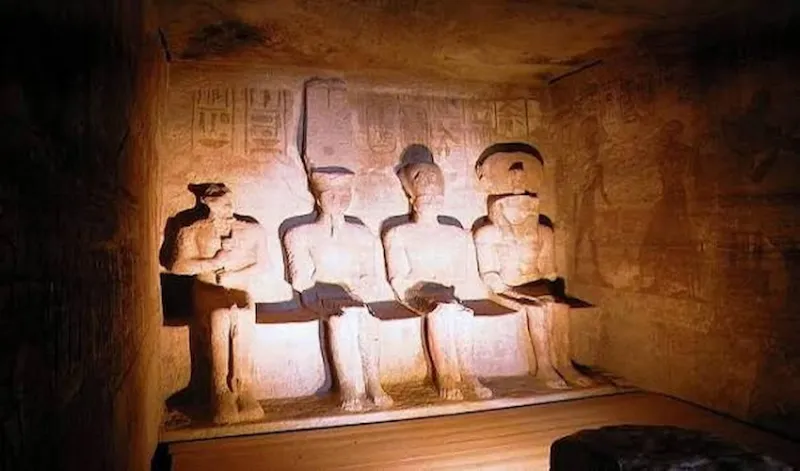
Among the most remarkable abu simbel facts is the temple’s famous solar alignment.
Twice a year, traditionally associated with February 22 and October 22, sunlight enters the Great Temple and reaches the inner sanctuary. The rays illuminate several of the sacred statues while Ptah, the deity associated with darkness, remains in shadow.
This phenomenon demonstrates the sophisticated understanding of astronomy and architecture possessed by ancient Egyptian builders.
The solar event is one of the most fascinating reasons to visit the Abu Simbel Temple, particularly for travelers interested in the connection between ancient Egyptian religion, astronomy, and engineering.
How Abu Simbel Was Saved
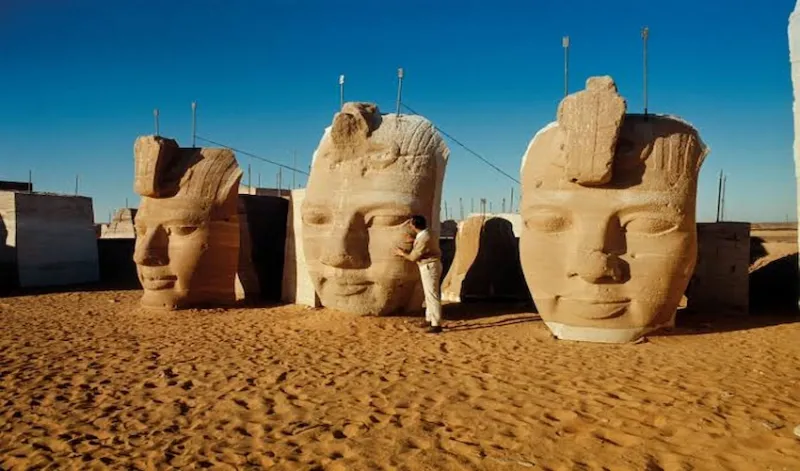
The story of the Abu Simbel Temple did not end in antiquity. In the 1960s, the construction of the Aswan High Dam threatened to place the temples underwater as the level of Lake Nasser rose.
An enormous international preservation campaign was organized under UNESCO. The temples were carefully cut into large sections, moved to higher ground, and reconstructed in a new location.
The relocation preserved the monuments for future generations and remains one of the most impressive archaeological preservation projects ever undertaken.
Seeing the Abu Simbel Temple today therefore means experiencing not only ancient Egyptian history but also a remarkable chapter in modern conservation.
Why Visit Abu Simbel?
A trip to the Abu Simbel Temple is ideal for travelers who want to experience the deeper history of Egypt beyond the country's most famous attractions.
You can:
- Stand before the colossal statues of Ramses II.
- Explore the decorated chambers of the Great Temple.
- Visit the Temple of Queen Nefertari.
- Admire ancient reliefs depicting royal and religious scenes.
- Learn about Ramses II and his monumental legacy.
- Discover the remarkable solar alignment.
- See how the temples were rescued from the rising waters of Lake Nasser.
- Experience one of Egypt’s most spectacular archaeological landscapes.
Because of its remote location, visiting Abu Simbel requires some planning, but the experience is well worth the journey.
When Is the Best Time to Visit Abu Simbel?
The cooler months from October through April are generally more comfortable for exploring southern Egypt. An early-morning visit can also provide a more pleasant sightseeing experience, particularly during warmer periods.
Travelers fascinated by the temple’s astronomical design may also want to plan around the dates associated with its solar alignment. Because special-event arrangements can vary, checking current schedules before traveling is recommended.
How to Get to Abu Simbel
Most travelers reach Abu Simbel from Aswan, with flights and organized excursions among the most practical options. It can also be incorporated into a customized Egypt itinerary that combines Cairo, Luxor, Aswan, and a Nile River cruise.
Although the journey takes you far into southern Egypt, arriving at the Abu Simbel Temple rewards you with an unforgettable encounter with one of the country’s greatest monuments.
Make Abu Simbel Part of Your Egypt Adventure
The Abu Simbel Temple is much more than an impressive ancient structure. It represents the ambition of Ramses II, the religious beliefs of ancient Egypt, the artistry of its craftsmen, and the extraordinary efforts made to preserve the site for future generations.
From the colossal statues outside to the detailed carvings inside Abu Simbel Temple, every part of the complex tells a story.
If you are planning your first trip to Egypt or returning to discover more of the country, consider adding Abu Simbel to your itinerary. Explore the temples, uncover the stories carved into their walls, and experience firsthand why this remarkable site remains one of Egypt’s most unforgettable ancient wonders.
special features
why choose Egypt Tours Way
Local Expertise, Global Standards
Tailor-Made Experiences
Real People, Real Care
Handpicked Guides & Comfortable Travel
Great Value for Money
Best Deals and Opportunities
our testimonials
Moments That Mattered – From Our Adventurers
Lindsey Hunt
Trip to Luxor and Aswan

Adam Hank
Pyramids
Peter Shaun
Siwa

Fleur Hartley
Sharm el-Sheikh

Luna & Liam Ming
Adventure
Sofia Rodrigez
Solo trip

Joseph Jordan
Highly recommend
The Greens, The Kovács, The Chens
Egypt
Mo Elakad
El Fayoum

Sarah Cameron
Saint Catherine and El Minya
Kevin Pierce
Egypt