
Luxor Temple: History, Facts, and What to See in Ancient Egypt
02
Sep 2026
Luxor Temple: History, Facts, and What to See in Ancient Egypt
Standing in the heart of modern Luxor on the east bank of the Nile, Luxor Temple offers travelers an extraordinary opportunity to experience thousands of years of Egyptian history in one unforgettable place. Unlike many ancient monuments located far from modern life, Luxor Temple rises within the city itself, surrounded by the energy of contemporary Luxor while preserving the legacy of ancient Thebes.
For visitors planning an Egyptian adventure, Luxor Temple is more than a sightseeing stop. It is a journey through the world of pharaohs, sacred ceremonies, powerful rulers, and civilizations that continued to leave their mark on this remarkable site for centuries.
Where Is Luxor Temple Located?
Luxor Temple is located on the east bank of the Nile River in the center of Luxor, one of Egypt's most important historical cities. In ancient times, Luxor was known as Thebes and served as a major center of political and religious power.
The temple stood at the heart of the ancient city and was connected to the Karnak Temple complex by the famous Avenue of Sphinxes. This ceremonial route played an important role during religious celebrations and processions, creating a sacred connection between two of ancient Egypt's greatest monuments.
Today, the central location of Luxor Temple makes it an easy and rewarding experience to include in a Luxor sightseeing itinerary.
The History Behind Luxor Temple
The story of Luxor Temple began during Egypt's New Kingdom, with major construction associated with Pharaoh Amenhotep III of the 18th Dynasty. Over time, other rulers contributed to the monument, transforming it into the impressive complex visitors see today.
Tutankhamun and Horemheb continued work on the temple and contributed to its decoration, while Ramses II later expanded the complex significantly. His additions included a monumental entrance, colossal statues, obelisks, and an impressive courtyard.
These layers of construction make Luxor Temple a fascinating record of changing artistic styles, royal ambitions, and religious traditions across different periods of Egyptian history.
Luxor Temple and the Opet Festival
One of the most important aspects of the egypt luxor temple was its connection to the ancient Opet Festival. This major religious celebration involved a ceremonial journey between Karnak and Luxor.
Sacred barques associated with Amun, Mut, and Khonsu were transported during the festival, while rituals focused on divine renewal and the symbolic restoration of royal power.
Unlike temples primarily dedicated to the worship of a single deity, Luxor Temple played a special role in the renewal of kingship and the relationship between the pharaoh and the divine world.
The Avenue of Sphinxes provided the ceremonial link between Karnak and Luxor Temple, allowing visitors today to better understand how the ancient sacred landscape of Thebes was organized.
What to See Inside Luxor Temple
Exploring Luxor Temple reveals a remarkable collection of monuments, architectural spaces, and historical details.
The Monumental Entrance of Ramses II
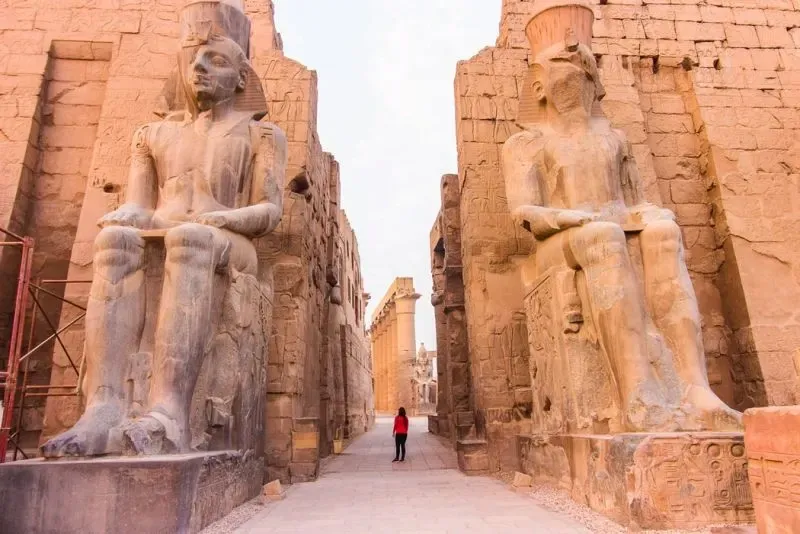
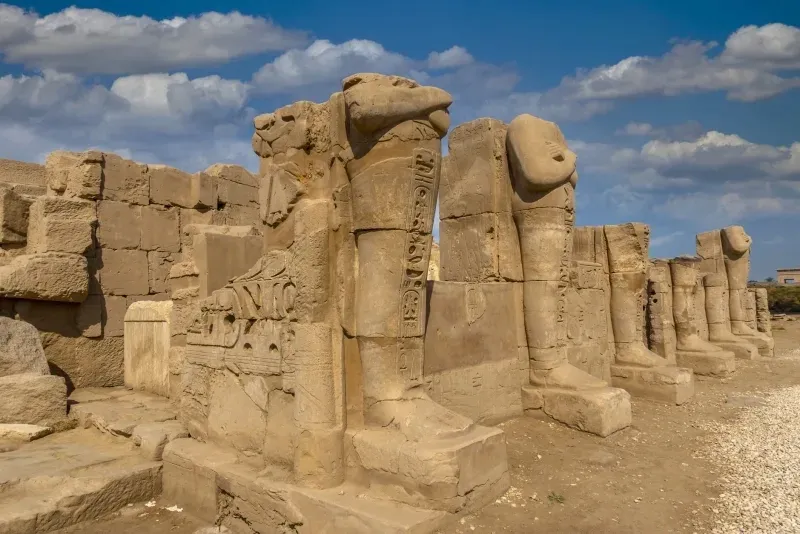
The impressive first pylon of Luxor Temple is associated with Ramses II and immediately introduces visitors to the monumental scale of ancient Egyptian architecture.
Colossal statues of the pharaoh stand near the entrance, while one of the original obelisks remains in front of the temple. Its companion was later moved to Paris, where it stands today in Place de la Concorde.
The Court of Ramses II
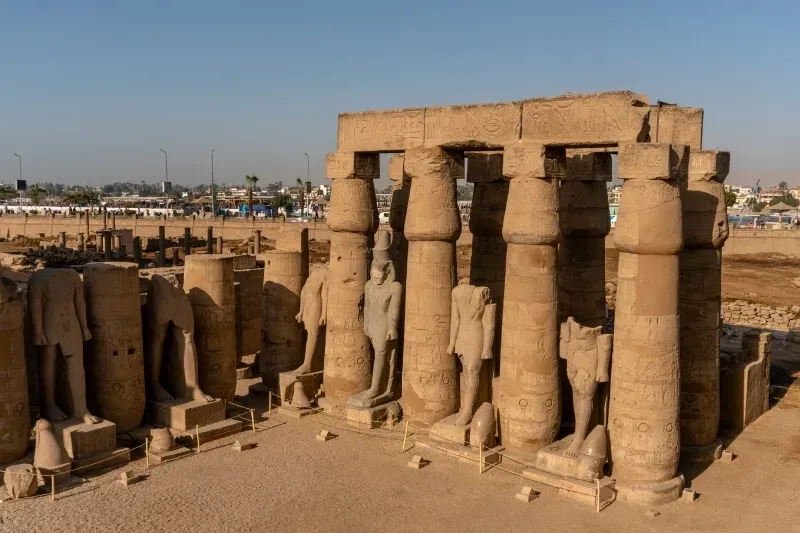
Beyond the entrance, visitors can explore the grand court created during the reign of Ramses II. The space is surrounded by columns, statues, and architectural features that demonstrate the power and influence of one of Egypt's most famous pharaohs.
The Great Colonnade
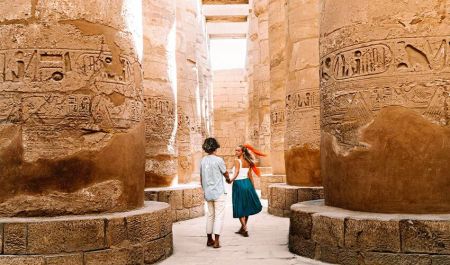
Another highlight of Luxor Temple is the spectacular colonnade associated with Amenhotep III. Massive columns line this processional space, while detailed reliefs illustrate scenes connected with the Opet Festival.
Walking through this monumental avenue gives travelers a sense of the ceremonies and celebrations that once filled the temple with priests, royal processions, music, and religious rituals.
The Inner Sanctuary
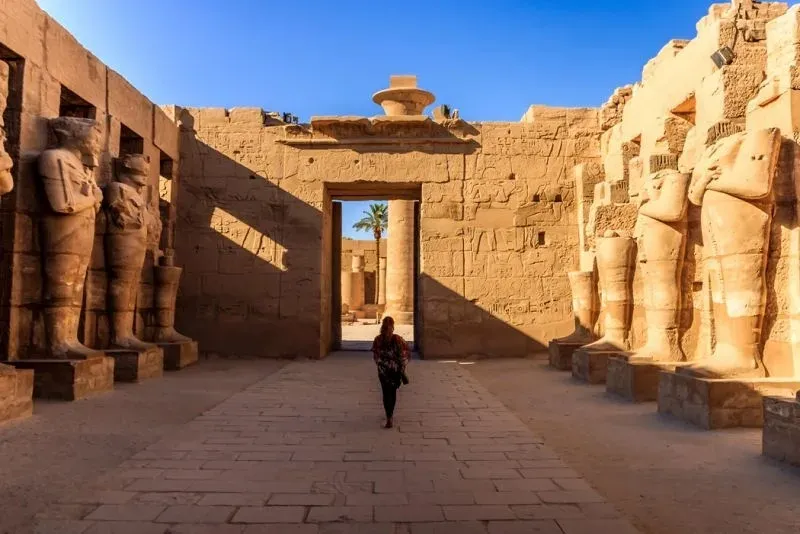
Deeper inside Luxor Temple, sacred spaces and shrines reveal the religious importance of the complex. Parts of these areas were later modified during different periods, adding another layer to the temple's long and complex history.
Layers of History Beyond Ancient Egypt
Among the most fascinating temple of luxor facts is that the monument did not stop evolving after the age of the pharaohs.
During the Roman period, parts of Luxor Temple were adapted for new purposes, and Roman artistic influences were added to sections of the complex. Later, a Christian church was established within the site.
The historical layers continued into the Islamic period with the construction of the Abu Haggag Mosque, which remains an important part of the complex today. This extraordinary combination of ancient Egyptian, Roman, Christian, and Islamic heritage makes Luxor Temple a powerful example of how history can accumulate in one place.
Why Luxor Temple Is Worth Visiting
A visit to Luxor Temple allows travelers to experience ancient Egypt in a setting where history remains closely connected to everyday life. You can walk through monumental gateways, admire towering columns, study ancient reliefs, and explore a site that has remained culturally significant for thousands of years.
For American travelers and international visitors, Luxor Temple is an ideal destination for anyone interested in archaeology, ancient civilizations, architecture, or Egyptian history. Its central location also makes it easy to combine with other major attractions, including Karnak Temple and the Avenue of Sphinxes.
The atmosphere becomes particularly memorable as daylight changes. Visiting Luxor Temple in the late afternoon or evening can offer a completely different perspective on its architecture and monumental scale.
Plan Your Visit to Luxor Temple
Whether you are traveling through Egypt on a cultural vacation, enjoying a Nile cruise, or spending several days exploring the ancient treasures of Luxor, Luxor Temple deserves a prominent place on your itinerary.
From the legacy of Amenhotep III and Ramses II to the sacred traditions of the Opet Festival and the later civilizations that reshaped the site, every section of Luxor Temple tells part of a much larger story.
Add this extraordinary monument to your Egypt travel plans and discover why Luxor Temple continues to captivate travelers from around the world. Explore its temples, walk in the footsteps of ancient processions, and experience the remarkable history that makes this site one of the essential highlights of any journey through Egypt
special features
why choose Egypt Tours Way
Local Expertise, Global Standards
Tailor-Made Experiences
Real People, Real Care
Handpicked Guides & Comfortable Travel
Great Value for Money
Best Deals and Opportunities
our testimonials
Moments That Mattered – From Our Adventurers
Lindsey Hunt
Trip to Luxor and Aswan

Adam Hank
Pyramids
Peter Shaun
Siwa

Fleur Hartley
Sharm el-Sheikh

Luna & Liam Ming
Adventure
Sofia Rodrigez
Solo trip

Joseph Jordan
Highly recommend
The Greens, The Kovács, The Chens
Egypt
Mo Elakad
El Fayoum

Sarah Cameron
Saint Catherine and El Minya
Kevin Pierce
Egypt