

Colossi of Memnon: Discover Luxor’s Legendary Giant Statues
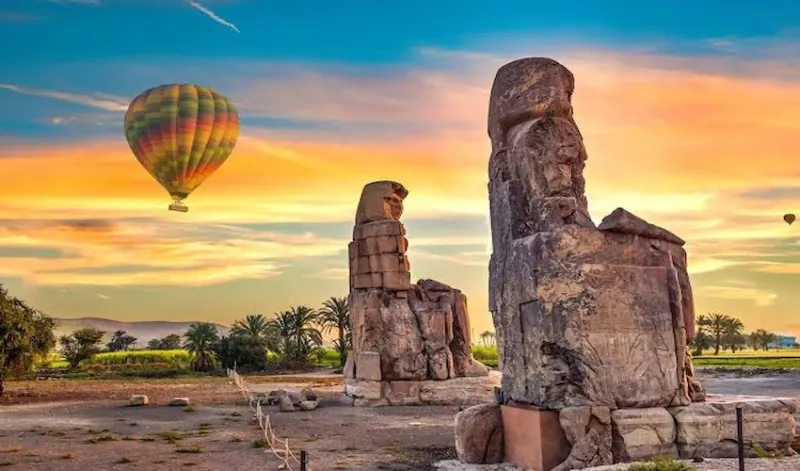
Standing on Luxor’s West Bank, the Colossi of Memnon are among the most recognizable monuments of ancient Egypt. These enormous quartzite statues depict Pharaoh Amenhotep III seated in royal majesty and have watched over the Theban landscape for more than 3,000 years.
Today, the Colossi of Memnon offer travelers a fascinating introduction to the history of ancient Thebes. Their enormous scale, remarkable craftsmanship, ancient inscriptions, and connection to the legendary “singing” statue make them a memorable stop on any Luxor itinerary.
What Are the Colossi of Memnon?
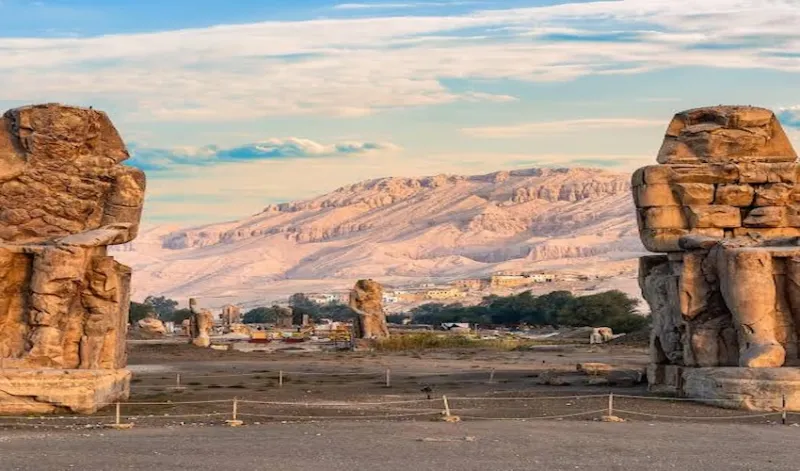
The Colossi of Memnon are two monumental statues of Pharaoh Amenhotep III, who ruled Egypt during the prosperous New Kingdom period. Each statue stands approximately 18 meters (60 feet) high and weighs around 720 tons.
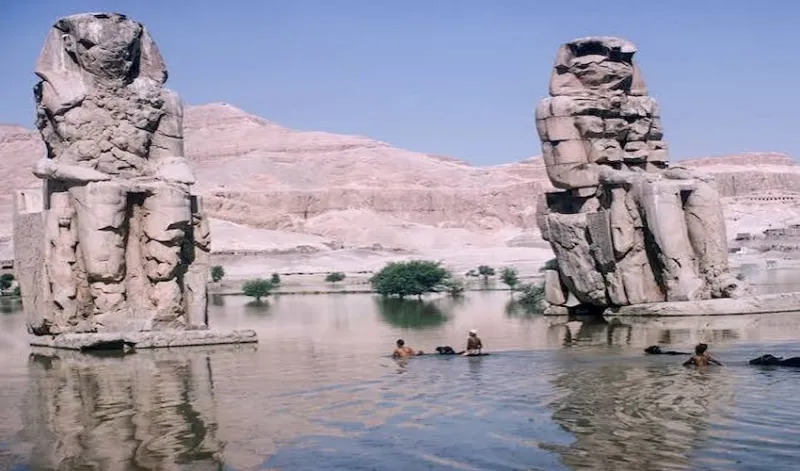
The statues were originally positioned at the entrance to Amenhotep III’s enormous mortuary temple. The temple complex once covered a vast area, but centuries of flooding, earthquakes, erosion, and later stone reuse destroyed much of the structure. The two colossal figures survived as powerful reminders of the complex’s former grandeur.
The Story Behind These Monumental Statues
Amenhotep III was one of ancient Egypt’s most prolific royal builders. During his reign, Egypt experienced considerable prosperity, allowing the pharaoh to commission an extraordinary number of temples, statues, and other monuments.
The Colossi of Memnon were created as monumental guardians of his mortuary temple. They portray the king seated and facing the rising sun, reinforcing his association with royal power and the divine world.
Each statue was carved from a single massive block of quartzite sandstone. The stone was transported approximately 675 kilometers from quarries near modern Cairo to Thebes, an extraordinary logistical achievement for the ancient Egyptians.
Colossi of Memnon Facts You Should Know
If you are planning a visit to Luxor, these colossi of memnon facts help explain why the statues are so impressive:
- The statues date to the reign of Pharaoh Amenhotep III.
- Each Colossus is approximately 18 meters tall.
- Each statue weighs about 720 tons.
- They were carved from quartzite sandstone.
- The stone was transported roughly 675 km to Thebes.
- They originally stood before Amenhotep III’s mortuary temple.
- Their famous name comes from the Greek hero Memnon rather than the Egyptian king depicted.
- Ancient visitors left more than 100 Greek and Latin inscriptions on the northern statue.
- One statue was famous in antiquity for producing a mysterious sound around dawn.
- The statues remain one of the most recognizable landmarks on Luxor’s West Bank.
Why Are They Called the Colossi of Memnon?
The name Colossi of Memnon comes from a fascinating encounter between Egyptian monuments and Greek mythology.
The statues actually represent Amenhotep III, but Greek travelers later associated them with Memnon, a legendary Ethiopian king who fought during the Trojan War. This identification became particularly strong because of the mysterious sound once associated with the northern statue at sunrise.
Ancient visitors interpreted the sound through the mythology of Memnon and his mother, Eos, the goddess of dawn. According to the legend, the sound could be understood as Memnon greeting or responding to his divine mother.
This Greek interpretation gave the monuments the name they continue to carry today.
The Mystery of the Singing Statue
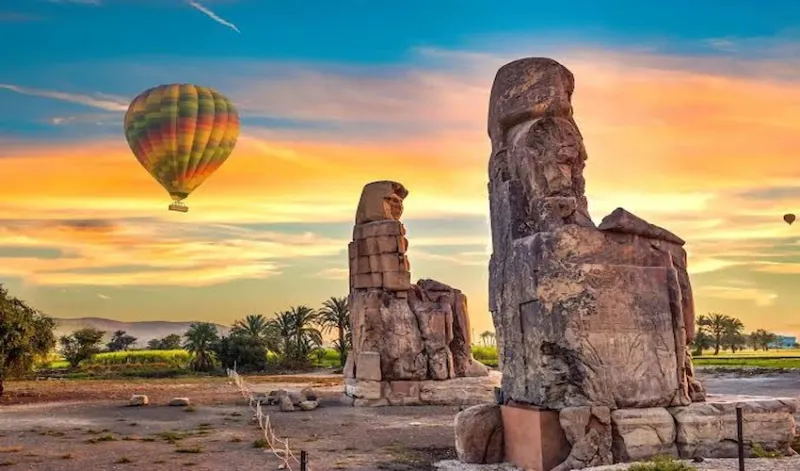
One of the most famous stories connected with the Colossi of Memnon is the legend of the “singing” northern statue.
Ancient writers reported hearing an unusual sound from the damaged statue around dawn. Strabo, the Greek geographer, described hearing the phenomenon during his visit to Egypt around the first century BCE. Other ancient travelers compared the sound to musical instruments, a breaking string, or a mysterious whistle.
The exact historical circumstances surrounding the damage remain debated. The traditional account connects the sound to an earthquake, although modern scholarship questions the conventional dating of the event.
What is clearer is that cracks in the damaged statue created unusual acoustic conditions. Ancient observers believed the sound had supernatural significance, while modern explanations have focused on natural effects involving temperature, moisture, and vibrations within the stone.
Why Did the Singing Stop?
The mysterious sound did not continue forever.
Roman restoration work on the northern statue eventually sealed the cracks associated with the acoustic phenomenon. The repairs are traditionally linked with Emperor Septimius Severus in the early third century CE.
After the restoration, the inscriptions documenting visitors hearing the famous sound disappeared, suggesting that the phenomenon had ended. The statue therefore became silent, but its extraordinary reputation survived.
Ancient Visitors Left Their Mark
Another fascinating feature of the Colossi of Memnon is the collection of ancient inscriptions carved into the statues.
More than 100 Greek and Latin inscriptions were left by visitors between approximately the first and third centuries CE. Many recorded whether travelers had heard the mysterious sound at dawn.
Among the visitors connected with the site were officials, travelers, and members of the Roman elite. Emperor Hadrian and his wife Sabina also visited the statues in 130 CE, while the poet Julia Balbilla recorded the experience in Greek verse.
These inscriptions provide an unusual glimpse into ancient travel. Long before modern tourism, people were journeying to Luxor specifically to experience the extraordinary reputation of these monuments.
See the Colossi of Memnon in Luxor
A visit to the Colossi of Memnon is an opportunity to stand beside monuments that have survived thousands of years of political change, natural disasters, restoration, and environmental pressures.
Although the enormous mortuary temple they once guarded has largely disappeared, the statues still communicate the ambition of Amenhotep III and the remarkable capabilities of New Kingdom Egypt.
For travelers from the USA planning an Egypt vacation, the Colossi of Memnon are an easy and worthwhile addition to a Luxor itinerary. Combine them with the Valley of the Kings, Temple of Hatshepsut, Karnak Temple, and Luxor Temple to experience the extraordinary archaeological heritage of ancient Thebes.
Stand before these monumental figures, look closely at the surviving inscriptions and stonework, and discover the fascinating story behind one of Luxor’s most enduring landmarks.

Hot Air Balloon Ride in Luxor: See Ancient Egypt from Above
Experience a hot air balloon ride over Luxor at sunrise and enjoy breathtaking views of the Nile, Valley of the Kings, ancient temples, and the West Bank.
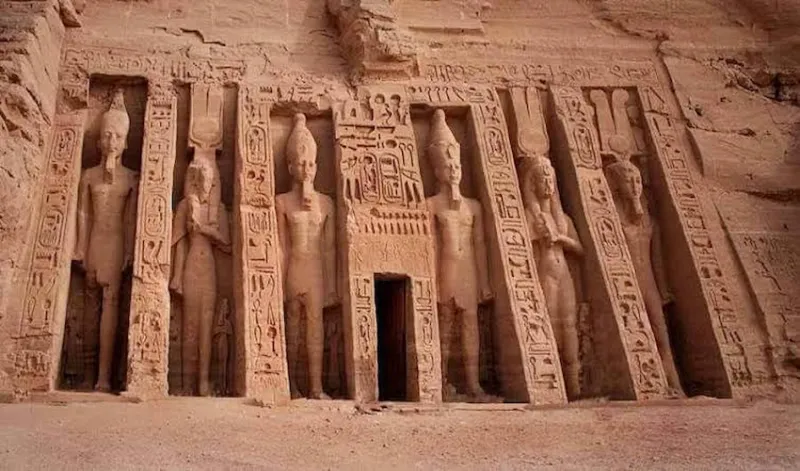
Valley of Queens: Discover the Royal Tombs of Ancient Egypt
Discover the Valley of Queens in Luxor, home to Queen Nefertari’s magnificent tomb and remarkable burial chambers revealing the history of ancient Egyptian royalty.
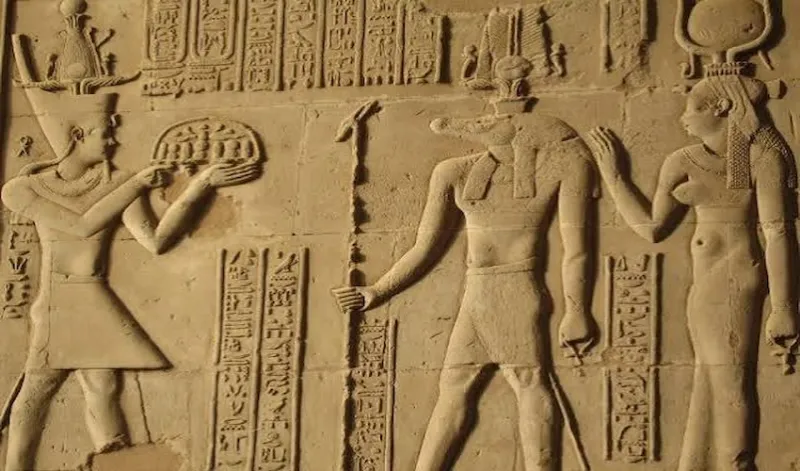
Discover Kom Ombo Temple: Egypt’s Remarkable Double Sanctuary
Discover Kom Ombo Temple near Aswan, Egypt, and explore its unique double sanctuary dedicated to Sobek and Horus, ancient carvings, fascinating history, and stunning Nile views.
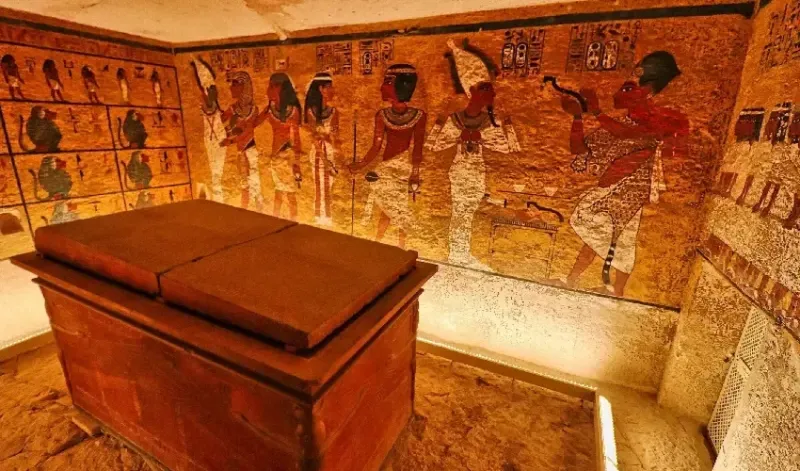
King Tutankhamun Tomb: Discover the Burial Place of Egypt’s Young Pharaoh
Explore the King Tutankhamun Tomb in Egypt’s Valley of the Kings and uncover the history, treasures, and mysteries surrounding the young pharaoh.
special features
why choose Egypt Tours Way
Local Expertise, Global Standards
Tailor-Made Experiences
Real People, Real Care
Handpicked Guides & Comfortable Travel
Great Value for Money
Best Deals and Opportunities
our testimonials
Moments That Mattered – From Our Adventurers
Lindsey Hunt
Trip to Luxor and Aswan

Adam Hank
Pyramids
Peter Shaun
Siwa

Fleur Hartley
Sharm el-Sheikh

Luna & Liam Ming
Adventure
Sofia Rodrigez
Solo trip

Joseph Jordan
Highly recommend
The Greens, The Kovács, The Chens
Egypt
Mo Elakad
El Fayoum

Sarah Cameron
Saint Catherine and El Minya
Kevin Pierce
Egypt

FAQs